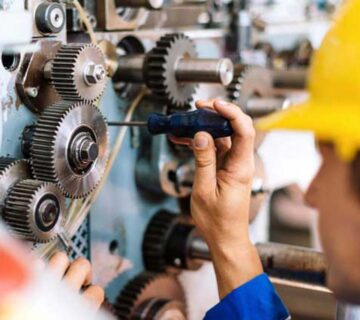
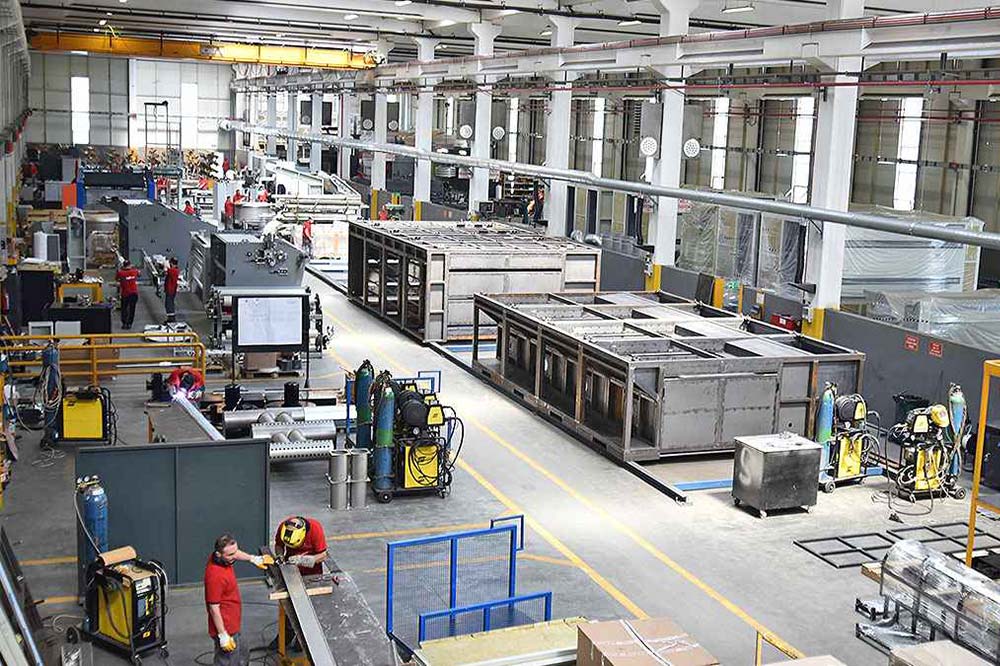
Machinery manufacturing has been a central pillar of industry from the first to the fourth industrial revolution. The increasing digitalisation of manufacturing is changing the way machines are designed and built
A machine uses power to control movement to perform a task or action, reducing the amount of human work required to complete it. In a typical machine, a mechanism triggers the activation of an actuator, which applies force and movement. Machines can also be mechanical systems, which include computers and sensors to control and monitor output.
The idea for simple machines has been around since the 3rd century, when the Greek philosopher Archimedes discovered the principle of mechanical advantage in the lever. He used this discovery to operate simple equipment using levers, pulleys and screws. Since then, machines have been powered by things as diverse as animals, people, natural forces, chemical, thermal power and electric power.
The machinery industry drove the first industrial revolution. In the early 20th century, automobile and motorcycle machine factories were built. The development of machinery led to great industrial advances in key sectors including the aerospace, automotive, transport and process industries.
Now, almost every workplace uses machinery of some kind – though many consumers aren’t exposed to the equipment that makes the products they use.